Latest Post

"church and state" @ Saoirse Ronan - The Warp Magazine & intrigue $0.99 books 3-Act Plot Structure 5 Key Publishing Paths 6 C's 99 cents AAM Abbey Clancy Abbi Jacobson ABC ABM Access Copyright ACE Awards achievers awards acquisitions acquisitions. business to business action before reaction action-adventure Actress ad agencies ad blockers ad sales ad:edit added value adding intrigue adding suspense adding tension adding tension and conflict Adele Adele Adkins Adèle Exarchopoulos Adriana Cernanova ads advertisers Advertising advertorial advice for fiction writers advice for writers advice from literary agents. advice on writing fiction AGM Alberta Alberta Magazine Awards Alberta Venture Alesha Dixon Alessandra Ambrosio Alex Morgan Alliance for Audited Media alliances Allison Brennan alternative delivery Alyssa Diaz Amazon Giveaway Amber Heard American Business Media American Library Association annual conference AMPA Amy Schumer and Word Usage Angel Angelina Jolie Anica Morse Rissi Anja Cihoric Anne R. Allen Annex Annex Business Media anniversaries anniversary announcement anthologies anthology anti-spam legislation applications appointment appointments apps AQEM architecture archives Arden Cho Ariana Grande Arnold art direction Artist As We Were Saying Ashley Tisdale Asian child laborers Asian child labourers ASME Asper associations Athletes Atlantic Canada Atlantic Journalism Awards audience audits Austen authentic voice author intrusions avoid author interruptions avoid wordiness award award-winning writing guide awards awards. Atlantic Journalism Awards awards. Western Magazine Awards Azra Akin b-to-b B.C. b2b Bade Iscil Bangladesh Barbara Fialho Barbara Palvin basic formatting basic formatting for print BBC BC BC writers BC Youth Writers Camp bcamp Becky G before you publish your novel before you submit your novel beginning of your novel beginning of your short story believable Bella Hadid Bella Heathcote Bella Thorne Bello magazine Ben Toms benefits Beowulf best practices beta readers Beyoncé Knowles Bianca Balti Biography Blake Lively blogs blue box board book awards book contests book festivals book giveaway book promos books for 99 cents books for authors bookstores BPAWW branding brands Bravo Magazine Brie Larson - bring your characters to life bring your story to life Britain British Columbia Britney Spears Browning Bryan Cohen budget business business innovation business media business reply Business to business C.S. Lakin CAFE Caity Lotz Camila Banus Camilla Kerslake Canada Post Canada Council Canada Magazine Fund Canada Periodical Fund Canada Post Canada Revenue Agency Canadian Art Canadian Association of Journalists Canadian Business Media Canadian Business Press Canadian Cover Awards Canadian Freelance Union Canadian Heritage Canadian Journalism Foundation Canadian Media Guild Canadian Newsstand Awards Canadian Online Publishing Awards Canadian writers Canadian Writers Group Canopy CanWest Canzine capitalization Captivate Your Readers Cara Delevingne Carmen Aub Carola Remer Caroline Flack Caroline Wozniacki carpet factories in Nepal Carrie Wong CASL Cate Blanchett Caterina Murino Catrinel Menghia CBM CeCi Ceci Korea celebrations Chanel Iman Chang School chapter one characterization characters Charisma Carpenter charities charity Charlee Faser Charli XCX Charlotte McKinney Chatelaine Chaucer Chen Man child labor child labor in Asia child labour child labour in India child labour in Pakistan child workers Childhood Regained children forced to work in factories children's China Chloe Grace Moretz Chloe Moretz Chloë Moretz choose the right word Chrissy Teigen Christina Milian Chuck Sambuchino Cimorelli Cinta Laura Circulation circulation. ABC City and regional Claudia Lee Claudia Schiffer CLB Media clear Cleo Australia Cleo Singapore close third-person point of view closure closures CMC collaborations collections and anthologies colour columns comics compelling fiction compensation competition comScore concise writing Condé Nast condense your novel conferences conflict of interest Congreve consumer consumer shows content management contests continued learning contract contract publishing contracts contributors controversy COPA copy editing copyediting copyright Cosmopolitan Australia Cosmopolitan Korea courses cover story covers CPF craft of writing craft of writing book craft-of-writing guide Craftfest creating a main character creating sentences that flow creative clusters creative nonfiction creative writing criticism critique critique of first page critique of first pages critique of historical thriller CRMA Cross Stitch Pattern cross-media ownership CrossStitch crowdfunding CSME cultural magazines cultural protections current affairs custom publishing cut down on wordiness cutting word count cyber symposium Daisy Lowe Daisy Ridley Dakota Johnson dangling participles Daphne Groeneveld Daphne Guinness dashes data David Bellemere Davis Bunn Dazed and Confused Korea deals declutter your sentences deep point of view deep POV Demi Lovato Denisa Dvořáková Department of Canadian Heritage departures design developmental editing dialogue Diane Kruger digital digital editions digital issues Digital Publishing Awards direct mail distribution don't tell Donald Maass Doutzen Kroes DP Lyle Dr. John Yeoman Drama Drew Barrymore Driven Dryden e-book formatting e-book marketing e-book publishing e-books e-commerce e-media e-paper e-readers eBooks eco-paper edit edit and critique edit of first page editing editing advice editing fiction editing your own novel editions editor Editor's Choice editorial editors editors' resource effective writing elections Elizabeth Hurley Elizabeth Olsen Elizabeth Spann Craig Elle Australia Elle Canada Elle Fanning Elle France Elle Italia Elle Japan ELLE Korea Elle Mexico ELLE Singapore Elle Spain Elle Sweden Elle UK Ellen Pompeo ellipses Elsa Pataky email Emeraude Toubia Emerge Media Awards Emily Bett Rickards Emily Didonato Emma Roberts Emma Stone English Literature on Internet environment Eric Wilson Eva Longoria events excellent writing guides exits expansion expressing thoughts in fiction Fabulous Magazine fact checking FAPA Book Awards farm fashion Fashion Designer Fashion Model fees Fei fei sun fellowships Ferne McCann festivals fiction fiction advice fiction definitions fiction editor fiction lingo fiction question fiction techniques fiction terms fiction writing fiction writing advice fiction-writing fiction-writing advice fiction-writing techniques Filippa Hamilton Palmstierna finalists finalists in book awards Financial financials finding your voice FIPP Fire up Your Fiction first 10 pages first 5 pages first chapter first draft first five pages first line first page first page critique first page of your novel first pages first pages of your novel first paragraph first paragraphs first-page critique FKA Twigs Flare fonts food Foreign influence on English foreshadowing forests ForeWord Reviews Book of the Year Awards 2013 Foreword Reviews IndieFab Book Awards format formatting formatting documents formatting your manuscript formattting your documents Frederique Molay free e-book freelance editing freelance editor freelancers freepapers fulfillment fun with magazines funding fundraising future of magazines G.B. Shaw gags Gemma Ward Germany Getty Images Gigi Hadid Gillian Anderson Gillian Jacobs Girlfriend Australia Giveaway Glacier Media Inc. Glamour Germany Glamour UK global media Globe and Mail Glossary glossary of commonly misspelled words Go Ara going from nonfiction to fiction writing Goodreads Goodreads Giveaways Google governance government support GQ Magazine Japan Grace Elizabeth grammar grammar tips grants Grazia Italy great resource books for writers Greater Fort Worth Writers gren printing Guideposts Magazine Guinevere Van Seenus Guy Kawasaki Gwen Stefani Gwyneth Paltrow Ha Ji Won Hailey Clauson Hannah Davis Harper's Bazaar Romania Harper's Bazaar Serbia Harper's Bazaar Spain harper's bazaar UK Harpers Bazaar Singapore Harpers Bazaar Spain head-hopping Hearst Helena Bonham Carter help eradicate child labor Hemingway Hilary Duff history Hmmm... Holly Willoughby hone your writing skills honing your craft honing your writing craft hook hook readers in hook the reader in hook your reader how to create an outline of your scenes how to cut words from your novel how to market your book how to publish your own book How to Sell Loads of Books how to show instead of telling how to write a bestselling novel how to write a book How to Write a Damn Good Thriller how to write a novel how to write a short story how to write a story how to write a suspense novel how to write a thriller how to write action scenes how to write an exciting story how to write compelling fiction how to write effective fiction how to write effective nonfiction how to write fiction how to write scenes how to write suspense Hwang Jung Eum Hye kyo Song hyphens Hyun young I or me Ilana Glazer illustration Imaan Hammam improve your writing style increase your book sales increasing tension Independent Book Publishers Association India indie authors indie publishing Indie Reader Discovery Awards IndieReader IndieReader Discovery Awards industry associations Industry studies indy bookstores indy mags info dumps initial critique insert cards InStyle InStyle Germany InStyle UK interactive interns internships investigative journalism iPad Irina Shayk IRMA Iselin Steiro Jacquelyn Jablonski Jae kyung James N. Frey James Scott Bell Jane Friedman Jane Jacobs prize Janine Chang Jena Goldsack Jenna Dewan Jennifer Lawrence Jennifer Lopez Jessica Alba Jessica Biel Jessica Chastain Jessica Ennis Hill Jessica Marais Jessica Morrell Jesus Jimmy Backius Joanna Krupa Joanna Penn jobs Jodie Renner Jodie Renner Ediitng Jodie Renner Editing Jodie Renner Editing. John Yeoman joint ventures Jordan Dane Josephine Skriver journalism Journalism Online journalism schools Julia Hafstrom Julia Roberts Julianne Moore Junseob Yoon Kaley Cuoco Karlie Kloss Karolina Pisarek Kate Beckinsale Kate Beckinsaleod Kate Hudson Kate Upton Katharine McPhee Katherine McNamara Katy Perry KDP Select Keats Keira Knightley Kendall Jenner Kim Kardashian Kimberley Kimberly Garner Kimberly Stewart Kindle Kindle book promotions Kirsten Dunst Kobo Kristen Stewart KRWs Krystal Jung Krysten Ritter Kylie Jenner L’Officiel Indonesia labour dispute labour-management dispute lachlan bailey Lady Gaga launch launches Lauren Cohan Lauren Conrad Lauren Goodger law lay vs. lie layoffs layout Le French Book Lea Seydoux lead character lecturing readers legal legislation Lena Meyer-Landrut length for fiction length of novels libraries life in BC lifetime achievement Lily James Lily Rose Depp Lily-Rose Depp Linda Bonney Olin Lindsay Ellingso Lindsay Ellingson line editing line extensions Lingerie lists literacy literary agents literary definitions literary journalism literary terms Literature Period LNA lobbying logical long-form Luma Grothe Mackenzie Hamilton Maclean's Macleans Madame Figaro Greece Madame Figaro Japan Madame Figaro Magazine mag world view Magawards Magazine Awards magazine business Magazine Fund Magazine Grands Prix magazine industry magazine profiles Magazine Publishers of America magazine world view Magazines Canada MagazinesBC Magdalena Frackowiak MagNet Mags BC MagsBC mailing rates main character maisonneuve Mallika Sherawat management Manitoba magazines March to a Bestseller March to a Bestseller 2 Marcy Kennedy Margot Robbie Mariah Carey Marie Claire Korea Marie Claire South Africa Marie Claire Spain Marie Claire Turkey Marion Cotillard market your book Marketing marketing your book Marloes Horst Marlowe Mary Masthead Matt Jones Meagan Good measurement Media companies mediascout member magazines mentors Meredith Corporation mergers mergers. trade associations Metaphysical Poetry metrics Micaela Schaefer Michael Hauge Michaela Kocianova Michelle Monaghan Michelle Obama Michelle Trachtenberg Microsoft Word Miley Cyrus Milton Miranda kerr misplaced modifiers Miss World Pageant mobile Model Modern Luxury Magazine monetizing content Monika Jac Jagaciak mood moral rights MPA multimedia Murder She Writes mystery Mystery Writing is Murder NADbank NAFTA Naomi Watts Natalia Vodianova Natasha Oakley Natiional Media Awards Foundation National Magazine Awards National Magazine Awards Foundation National Post native advertising natural voice Nepal Nerea Barros New Hollywood new products New Yorker Newcom news newspapers newsstand newsstand marketing newsstands Next Issue Media NFC Nicky Hilton Nico Bustos Nicola Roberts ndon Nina Agdal NMA Novel Novel Writing Intensive Retreat obituary Olivia Holt Olivia Munn Olivia Wilde Oltin Dogaru OMDC onlilne online online ads Ontario Ontario Arts Council opening opening paragraphs Openings osborne Osprey Media outline your scenes Pacing Padma Lakshmi Pakistan Pamela Anderson paper Paris Paris Hilton Paris Hilton port partnerships past perfect tense Paula Patton Pauline Hoarau pay-for-use paywalls Péladeau People Perrie Edwards photo essays photography Photoshoot pick up the pace picture services Pinter Pixie Lott plain language plot PMB podcasts poetry point of view polishing poll Pope Post Media Network postal subsidy Postmedia Precedent Pregnant Blake premise prepress pricing print print and digital print and TV print and web print solutions print to digital print-to-web printing Printout Stitch Display privacy production professional development promoting your book promoting your Kindle book promotion promotions proofreading protagonist public affairs public art public place public relations public support publish your book publishers Publishers Weekly publishing publishing models publishing on Amazon Punctuation punctuation help PWAC PwC Quebec Quebec Magazine Awards Quebecor Quebecor Media Quebecor World Quick Clicks quote Rafflecopter Giveaways Raica Oliveira rankings Reader's Digest Readers' Favorite Book Awards readership rebranding recycling Redbook Magazine redesign redesigns Redgees Redwood reference books regulation relaunches reorganizations replicas research resignations resource for writers resources for writers responsive design retailers retirement revenue revising revising and editing revising and editing fiction revising and editing your novel revising fiction revising your fiction revising your novel revision revision and editing revision and self-editing revision checklist revision process revisions rewriting Rhonda Rhimes Richa Chadda rights Rita Ora Robert Dugoni robot reporting Rogers Rogers Communications Inc. Rogers Consumer Publishing Rogers Media Rogers Publishing ROI Romantic poetry Ron Gronkowski Roselyn Sanchez Rosie Huntington Whiteley Rosie Huntington-Whiteley royalties RRJ running a book giveaway Russell Blake Russell James Ryan Jerome Ryerson Review S Moda’s sale on ebooks Sandra Brown Sasha Pieterse save on editing Say What? The Fiction Writer's Handy Guide to Grammar scene outline scenes scholarships Sebastian Kim Selena Gomez self-editing self-publishing selling your book Selma Blair seminars sentence structure setting Seventeen Seventeen Prom Magazine. J SFX Shailene Woodley Shakespeare shakeups Shane Gericke Shanina Shaik Shape Magazine Sharuti Haasan Shay Mitchell Shelley Sheridan short fiction short stories short story short story anthologies short story contests Show show character reactions show don't tell showing emotions in fiction showing reactions in fiction Singer single copies Single copy single copy sales SIP SIPs social media Socialite software Sohai Ali Abro Sonam Kapoor Song Hye Kyo Sophia Bush Sophie Turner South Asia Southern Writers Magazine spam special editions special interest publications special sections specials specialty TV spelling spelling dictionary Spelling on the Go spelling resource Spenser spinoffs sponsored advertising St Joseph Communications St. Joseph Media Stacy Green staff standards Star Wars STARCH starting out your novel starting your novel starts and stops startups state of the industry stay in the POV of the character Steffy Argelich Steve Berry Steve Scott Steven James stimulus and response story gaffes story no-no's strategies streamline your writing streamlining writing students Style style blunders in fiction style gaffes in fiction style in fiction Style That Sizzles & Pacing for Power Style that Sizzles and Pacing for Power submitting a short story submitting manuscript subscriptions succession Sun Li Supermodel Susanne Lakin suspense Suspense Magazine suspense-thrillers suspenseful opening Sylvie Meis tablets Takeovers Tanya Dziahileva taxes Taylor Swift TC Media technology Television Personality Tennis player Terminal Rage terms used in fiction that vs which that vs. who The 7th Woman The Bookshelf Muse The Eiffel Tower the first page of your novel The Kill Zone The Kill Zone blog the revision process the tyee The Walrus The Wicked Writing Blog thriller thriller editor Thrillerfest thrillers Time Time Inc. Time Magazine tips tips for authors tips for writers tips for writing tips for writing a short story tips for writing fiction tone Tori Kelly Toro Toronto Life Torstar Tove Agren Tove Lo tracking trade trade associations traffic training transaction transactions Transcontinental Transcontinental Media transitions travel trends tributes trim your word count Trivia masquerading as profundity Troubleshooting Your Novel TV TV Guide Magazine TV presenter TVA Group typography U.S. U.S. National Magazine Awards Ujjwala Raut unions unpaid work USPS Vancouver mag verbs Vicky Pattison Victoria Silvstedt video videos viewpoint viewpoint in fiction Vika Falileeva Virginie Efira virtual conference Vita Sidorkina Vogue Australia Vogue Brazil Vogue China Vogue India Vogue Japan Vogue Korea Vogue Mexico Vogue Russia Vogue Spain Vogue Thailand voice voice in fiction Voices from the Valleys volunteer readers volunteers Walrus waste reduction wayback web web and print webinar webinars western Western Living Western Magazine Awards When Words Collide which vs that white paper wholesalers Woman Spain women's magazines Womens Health Australia word choice word count for fiction word count for novels word list Word on the Street word usage Wordsworth workflows workshops for writers world view wots write a popular novel write a suspense novel write a thriller write more economically write suspense write suspense fiction write tight write tighter writer's conference writer's conferences Writer's Digest Writer's Digest Awards Writer's Forensics blog Writer's Knowledge Base writer's workshop writers writers conferences writers conventions writers workshops Writers Write writers' conference writers' conferences writers' resource writers' retreat Writers' Union Writers' Village writers' workshop writers' workshops writing writing a bestseller Writing a Killer Thriller writing a novel writing a short story writing a suspense novel writing a thriller writing action scenes writing advice writing and writers writing compelling fiction writing conferences writing conventions writing fast-paced fiction writing fiction writing guide writing guides writing resource writing scenes writing skills writing suspense writing suspense fiction writing tense action scenes writing thrillers writing tips writing your novel Wyatt Xenia Tchoumitcheva YA fiction Yossi Michaeli your first page your first pages your opening your story opening Yu Tsai Yubin Yumi Lambert Yvonne Strahovski zines Zinio Zoey Deutch

Cineplex magazine, published by Cineplex Entertainment, will now be distributed in two Postmedia newspapers  the Montreal Gazette and Vancouver Sun in addition to its insertion in the Globe and Mail. The magazine has a total circulation of 700,000, of which half will now be delivered with daily newspapers, effective with the February issue; 89,704 copies per month in the Gazette and 107,990


Peter Hodson and new challenge
A former Bay Street money manager has purchased Canadian MoneySaver magazine and will publish it out of an office in Kitchener. According to a story in the Waterloo Region Record, Peter Hodson, 48, left his job as chair of Sprott Asset Management, a leading investment firm, and bought the magazine because he wasn't having much fun. “I didn’t really enjoy it that

An analysis by MastheadOnline of ABC circulation figures shows that the volume of mailed subscriptions has declined 18% over five years (June 2006 - June 2011). The impact for Canada Post is obvious, but it is also a bellwether for the magazine industry , as alternative means of distribution -- more single copy sales, more bulk distribution and more piggybacking with newspapers -- have increased

I've been very busy editing fiction manuscripts, mostly thrillers, mysteries, romantic suspense and other crime fiction, as well as publishing my craft of fiction articles on various writers' blogs, so my own blogspot here is getting negelected.

In fact, today (Jan. 19, 2012), I have four different articles published on four different sites:

Hot off the press - "Check Your Facts, Ma'am!" (so you don't annoy and alienate your readers) is up on Blood-Red Pencil blogspot, at http://www.bloodredpencil.blogspot.com/.

And an updated version of my "Thrillers vs. Mysteries" is up on The Thrill Begins blogspot, at
http://thethrillbegins.blogspot.com/.

Also, Part 3 of "Tension on Every Page" (with parts 1 & 2 just below it) is up on DP Lyle, MD's blog, Writer's Forensics Blog, at
http://writersforensicsblog.wordpress.com/.

And "Essential Elements of a Bestselling Thriller" is up at Suspense Magazine's blog:
http://www.suspensemagazine.com/blog2/

Drop on over to any or all of them, and leave a comment if you have a minute to spare!

And keep on writing!

by Jodie Renner, editor and author

Dialogue is one of the first things agents and editors look at when they receive a manuscript for consideration. If the dialogue is wooden, stilted, and artificial, most agents will assume that the rest of the writing is amateurish, and the manuscript will be quickly rejected. Here are some concrete ways to make your dialogue more compelling and natural-sounding.

 A. Dialogue needs tension, conflict and emotion!

This one is huge. As Randy Ingermanson and Peter Economy say in Writing Fiction for Dummies, “Dialogue is war! Every dialogue should be a controlled conflict between at least two characters with opposing agendas. The main purpose of dialogue is to advance the conflict of the story.”

1. Leave out the “Hi, how are you?” “I’m fine, and you?” “Nice day,” stuff, and cut to the chase. Skip past introductions and all that empty blah-blah small talk.

2. Avoid any kind of long monologue or dialogue that just imparts information, with no tension or emotion.

3. Don’t use dialogue as “filler” – if it doesn’t advance the plot, heighten the conflict, or deepen the characterization, take it out.

4. Include lots of emotional or sexual tension and subtext in your dialogue. Silence, interrupting, or abruptly changing the subject can be effective, too.

B. Loosen up the dialogue.

 The most common problem with dialogue for new writers is that it often sounds too stiff and formal. Here are some easy, quick tips for loosening up the dialogue to make it sound more natural:

1. Read your dialogue out loud. Does it sound natural? Can you cut some words out, or use more common, everyday conversational words, rather than more “correct” words? In conversation, use “bought” rather than “purchased,” “use” rather than “utilize,” etc.

2. Use contractions. Change “I am” to “I’m”, “we will” to “we’ll”, “do not” to “don’t”, “they will” to “they’ll,” etc.

3. Break up those long, grammatically correct complete sentences. Nobody talks in complete sentences in informal conversations with friends (or enemies) and family, especially in stressful situations. Frequently, use some short sentence fragments, and one-word answers.

4. Don’t have one person go on and on about a subject. Fiction is not the place for a lecture on a topic, or somebody speaking at length about himself. It’s not natural, and your readers aren’t interested in long monologues! Have the other person interrupt to ask a question, give their opinion, seek clarification, change the subject, etc.

C. Keep it real!

 Avoid unnatural dialogue caused by having the characters say things they would never say, just to impart some information to the readers! An extreme example of this would be a character saying to his sister: “As you know, our parents died in a car crash five years ago.” Or even the more subtle, “As your lawyer, I must advise you…” Using dialogue this way to get some information across to the reader is artificial and a sure sign of an amateur writer. Work the information in subtly, without having one character say something that the other would obviously already know.

D. Give each character his or her own voice or speaking style. Make sure all your characters don’t sound the same (like the author).

 First, pay attention to differences in gender, age, social status, education, geographical location, historical era, etc. Some characters, especially professionals, will use more correct English and longer sentences, while others will use rougher language, with a lot of one- or two-word questions or answers, sprinkled with expletives.

 Then, think about individual personality differences within that social group, and the situation. Is your character: Shy or outgoing? Talkative or quiet? Formal or casual? Modern or old-fashioned? Confident or nervous? Tactful or blunt? Serious or lighthearted? Relaxed or stressed? And give each character their own little quirks and slang expressions, but exercise caution when using slang or expletives. (More on that in another article.)

E. Gender differences.

Bear in mind that men and women tend to express themselves differently.

- In general, men are terser and more direct; they usually prefer to talk about things rather than people or feelings; and they often use brief or one-word answers.

- Women, on the other hand, like to talk about people and relationships; often hint at or talk around a subject, tend to express themselves in more complete sentences; and often want to discuss their feelings.

- These differences are especially important to keep in mind if you’re a female author writing dialogue for male characters, and vice-versa.

F. Other tips:

1. Avoid “talking heads” – pages of unbroken dialogue, with little action or description.

- Move the characters around the scene, and indicate their reactions, gestures and body language:

“…as they walked into the kitchen,” “They pulled up in front of the police station,” “He crossed his arms,” “She got up and started pacing.” “He touched her arm.” “She gasped in alarm.” “He clenched his fists.” And so on.

2. For dialogue tags, use mainly he said and she said (and asked for questions), which are non-intrusive, rather than words like remarked, conjectured, queried, interjected, insinuated, pronounced, and uttered, which draw attention to themselves and can be annoying.

3. Also, beware of using non-speaking words as attributes, like “That’s so nice,” she smiled, or “You bet,” he grinned. You can’t “smile” or “grin” words! But you can say, “You bet.” He grinned and waved as he pulled away.

 4. However, in addition to he said and she said, words like shouted, whispered, mumbled, yelled, murmured, and screamed are very useful for advancing the plot and ramping up your imagery.

5. Avoid the dialogue tag if it’s obvious who’s speaking.

6. But do make it clear who’s speaking. Readers don’t want to have to back up and check to see who’s talking now.

7. Try to use action tags (beats) instead of dialogue tags, such as:

Shelley hung up the phone. “That was Carole.”

Mark tensed. “What did she want?”

8. Avoid having the characters constantly using each other’s names. Once in a while is good, but don’t overdo it.

Resources: On Writing Romance by Leigh Michaels, A Writer’s Guide to Fiction by Elizabeth Lyon, Writing Dialogue by Tom Chiarella, Novel Shortcuts by Laura Whitcomb,
Writing Fiction for Dummies by Randy Ingermanson and Peter Economy

See also "Dialogue Nuts and Bolts - How To Write Dialogue Accurately."


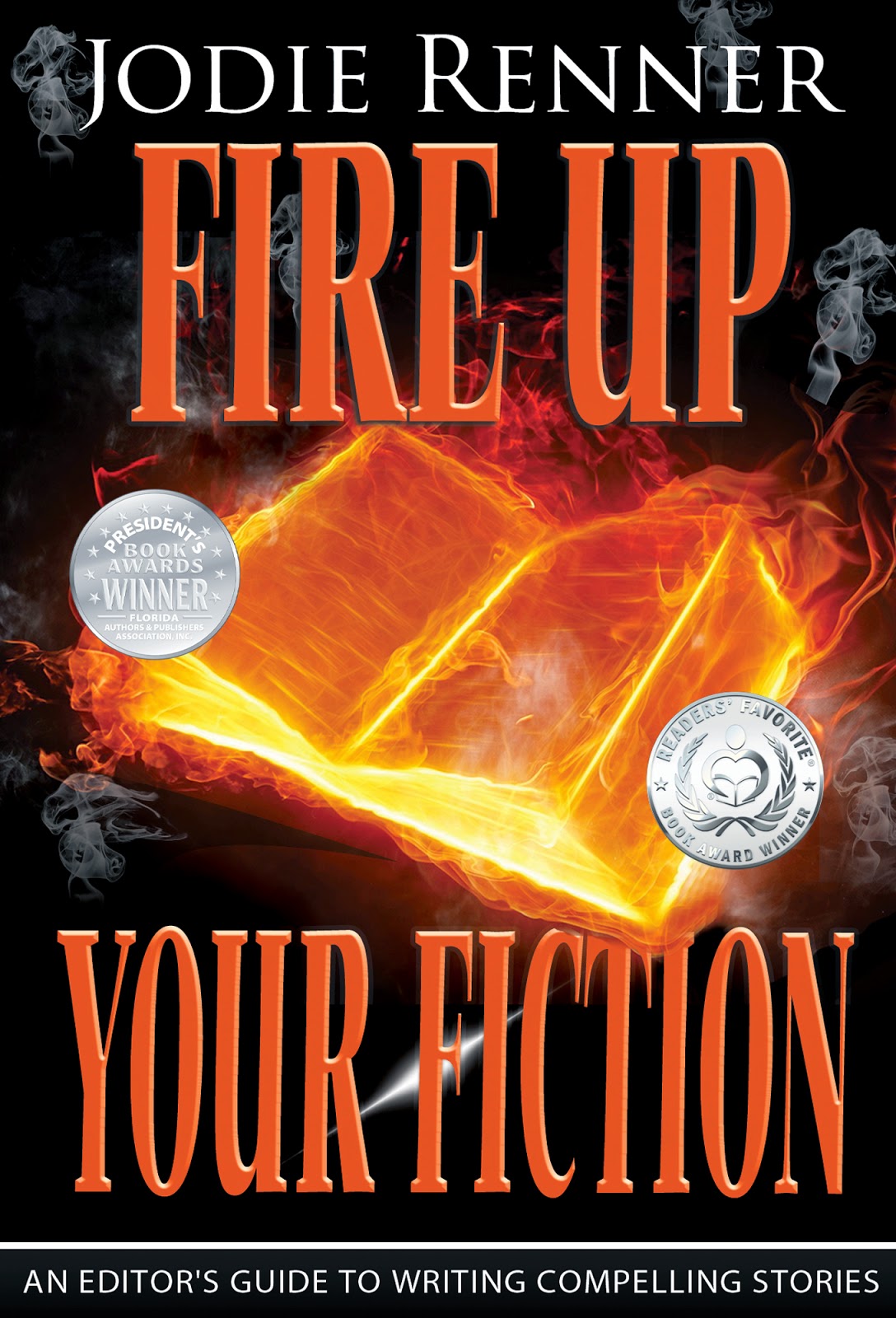
Jodie Renner is a freelance fiction editor and the award-winning author of three craft-of-writing guides in her series An Editor’s Guide to Writing Compelling Fiction: Captivate Your Readers, Fire up Your Fiction, and Writing a Killer Thriller. She has also published two clickable time-saving e-resources to date: Quick Clicks: Spelling List and Quick Clicks: Word Usage. You can find Jodie at www.JodieRenner.com, www.JodieRennerEditing.com, and on Facebook, Twitter, and Google+. Click HERE to sign up for Jodie’s occasional newsletter.


What is NaNoWriMo, anyway?

NaNoWriMo stands for National Novel Writing Month, an incentive for aspiring writers to get off their butts and start writing. It’s held in November, because what else will you do in November, anyway?

How do I find out about it?

For more info and to register for NaNoWriMo, visit their official website at www.NaNoWriMo.org. Here’s the answer to your first question, on their FAQ page:

NaNo in a Nutshell:

“What: Writing one 50,000-word novel from scratch in a month's time.

Who: You! We can't do this unless we have some other people trying it as well. Let's write laughably awful yet lengthy prose together.

Why: The reasons are endless! To actively participate in one of our era's most enchanting art forms! To write without having to obsess over quality. To be able to make obscure references to passages from our novels at parties. To be able to mock real novelists who dawdle on and on, taking far longer than 30 days to produce their work.

When: You can sign up anytime to add your name to the roster and browse the forums. Writing begins November 1. To be added to the official list of winners, you must reach the 50,000-word mark by November 30 at midnight. Once your novel has been verified by our web-based team of robotic word counters, the partying begins.

Where: You write wherever you’d like. On your computer, on your iPad, on a typewriter---anywhere is fine, just as long as you’re writing! For a more in-depth NaNoWriMo overview, visit the devilishly handsome What is NaNoWriMo? and How NaNoWriMo Works pages.”

***

More info and background on NaNoWriMo:

According to Wikipedia, “NaNoWriMo is an annual creative writing project coordinated by the non-profit organization The Office of Letters and Light. Spanning the month of November, the project challenges participants to write 50,000 words of a new novel in one month. The project has been running since July 1999 by Chris Baty, and started out with only 21 participants. In 2009, over 170,000 people signed up and 2,427,190,537 words were written.

How do I get involved?

Writers wishing to participate first register on the project’s website, where they can post profiles and information about their novels, including a synopsis and excerpts. Word counts are validated on the site, with writers submitting a copy of their novel at the end for automatic counting. Municipal leaders and regional forums help connect local writers with one another by holding writing events and providing encouragement.”

What are the rules?

This is for fiction writing, but participants’ novels can be on any theme and in any genre, and in any language. According to the website’s FAQ, “If you believe you're writing a novel, we believe you're writing a novel too.” You start writing November 1, and the idea is for you to reach a minimum of 50,000 words by 11:59:59 PM on November 30, local time. We’re talking first draft here, not polishing and revising, which you leave till later. You’re allowed to do all kinds of advance planning and make extensive notes, but you can’t start the actual writing until November 1.

According to Wikipedia, “Participants write either a complete novel of 50,000 words, or simply the first 50,000 words of a novel to be completed later. While 50,000 words is a relatively low word count for a complete novel, it is still significantly more than the 40,000 word mark that distinguishes a novel from a novella. Notable novels of roughly 50,000 words include The Hitchhiker's Guide to the Galaxy, Brave New World, and The Great Gatsby.”

To complete the NaNoWriMo challenge, participants will need to write an average of about 1,667 words per day. Organizers of the event say that the aim is simply to get people to start writing, using the deadline as an incentive to get the story going and to put words to paper. This “quantity over quality” philosophy is summarized by the site’s slogan: No Plot? No Problem! This is also the title of Chris Baty's book of advice for NaNoWriMo participants, published in late 2004 by Chronicle Books.

Is there a cost to enter this program?

No, there is no fee to participate in NaNoWriMo; all you need to do is register in order to have your progress verified.

Are there any prizes?

No, there are official prizes are awarded, but you will receive a handy-dandy certificate to display as you wish, as well as an icon to display on the Web, and you’ll be officially included on the list of winners. Anyone who reaches the 50,000 word mark is declared a winner.

How do they know I reached the target number of words?

Beginning November 25, participants can submit their novel to be automatically verified for length. No precautions are taken to prevent cheating; since the only significant reward for winning is the finished novel itself and the satisfaction of having written it, there is little incentive to cheat. Novels are verified for word count by software, and may be scrambled or otherwise encrypted before being submitted for verification, although the software does not keep any other record of text input. It is possible to win without anyone (other than the author) ever seeing or reading the novel.

In October 2008, the self-publishing company CreateSpace teamed up with NaNoWriMo to begin offering winners a single free, paperback proof copy of their manuscripts, with the option to use the proof to then sell the novel on Amazon.com.

What about community support?

The official forums on the NaNoWriMo website provide a place for advice, information, criticism, support and an opportunity for “collective procrastination.” The forums are available from the beginning of October, when signups for the year begin, until late September, when they are archived and the database is wiped in preparation for the next year.

Most regions also have one or more Municipal Liaisons (ML) assigned to them, who are volunteers that help with organizing local events. MLs are encouraged to coordinate at least two kinds of meet-ups; a kickoff party, and a "Thank God It's Over" party to celebrate successes and share novels. Kickoff parties are often held the weekend before November to give local writers a chance to meet and get geared up, although some are held on Halloween night past midnight so writers start writing in a community setting. Other events may be scheduled, including weekend meet-ups or overnight write-ins.

Don’t have a computer to write on? NaNoWriMo runs a Laptop Loaner program for those who do not have regular access to a computer or word processor. Old, yet functional laptops are donated from NaNoWriMo participants. Those wishing to borrow a laptop are required to cover the cost of shipping it back and must send a $300 deposit along with proof of identity, but are not charged a fee for using the laptops. In 2006, AlphaSmart, Inc. donated 25 brand-new Neos to expand the Laptop Loaner library with the promise of 25 more over the next two years .

by Jodie Renner, http://www.jodierennerediting.com/

Thrillerfest in NYC was excellent again this year. I only attended the two-day Craftfest, but all the workshops were top-notch, and all led by bestselling authors. I attended classes led by Steve Berry, William Bernhardt, Grant Blackwood, Michael Palmer, John Gilstrap, Steven James, and Hallie Ephron. Wish I could have also attended some of the others that took place at the same time! Will get into more details about the seminars and topics soon. Ken Follett was our keynote speaker. He's a relaxed, fascinating speaker, and his talk was really inspiring.


As usual, I am editing three fiction manuscripts at a time (all crime fiction), as that seems to work for me. I edit the books in sections, so when one author is doing revisions on a section, I'm working on another manuscript, and so on. All three books I'm working on now are really well-written and compelling, and the authors are great to work with, so I'm really enjoying my freelance editing these days. As I near the end of one manuscript, I start looking closely at the ones others are sending me.

I haven't had time to post here as, besides editing fiction manuscripts and magazine articles, doing initial critiques of first chapters for others, and judging books for a Writer's Digest competition, I also post regularly on three other blogs: Crime Fiction Collective: http://crimefictioncollective.blogspot.com/,
The Thrill Begins: http://thethrillbegins.blogspot.com/ , and, less frequently, Blood-Red Pencil: http://bloodredpencil.blogspot.com/.  Check out these blogs for great articles of interest to writers (and readers), especially of crime fiction and thrillers.

Here are some of my craft of fiction articles and tips posted on other blogs:


CRIME FICTION COLLECTIVE, http://crimefictioncollective.blogspot.com/

April 25, 2011: Questions for Your Beta Readers

May 9, 2011: Show, Don’t Tell

May 23: Writing a Killer Thriller, Part I

June 6: Writing a Killer Thriller, Part II

June 20: Writing a Killer Thriller, Part III

July 18: Thrillers vs. Mysteries


PUBLETARIAT.COM: http://www.publetariat.com/


April 26, 2011: Questions for Your Beta Readers

 
THE THRILL BEGINS, http://thethrillbegins.blogspot.com/

March 31, 2011: Writing Effective Dialogue

April 28, 2011: Creating Compelling Characters

May 19, 2011: Act First, Explain Later

June 23, 2011: Pros and Cons of First-Person Point of View

July 21, 2011: Style Blunders in Fiction


BLOOD-RED PENCIL, http://bloodredpencil.blogspot.com/

August 7, 2010 – Act First, Explain Later

Sept. 17, 2010: Creating Compelling Characters

Oct. 2, 2010: Tips for Writing Effective Dialogue

Dec. 15, 2010: Show, Don’t Tell

Jan. 8, 2011: Style Blunders in Fiction

Feb. 11, 2011: Deep Point of View, or How to Avoid Head-Hopping

Feb. 16, 2011: Survive Your Writing or Editing Career

March 21, 2011: The Pros and Cons of First-Person Viewpoint

March 28, 2011: Deep Point of View, Part 2

April 18, 2011 – Deep Point of View- How to Avoid Head-Hopping, Part 3

Contact Form

Name

Email *

Message *

Powered by Blogger.